

Dubai Property Buying Requirements: A Complete Guide for Foreign & Iranian Investors
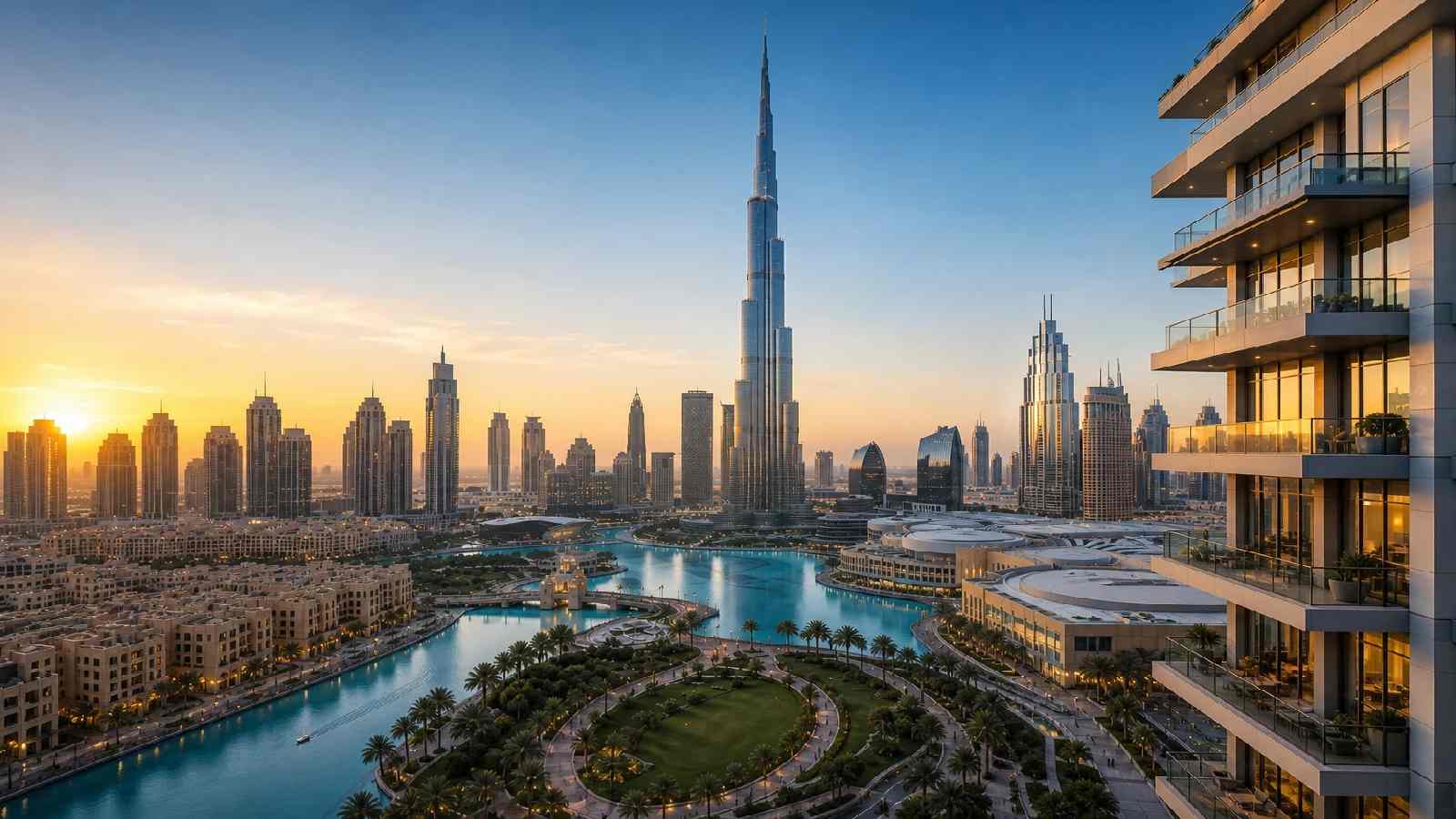
Buying property in Dubai has become one of the most attractive investment opportunities in the world. Whether you’re looking for a profitable real estate investment, a second home, or residency in the UAE, understanding the legal requirements and purchasing process is essential.
If you’re wondering whether Iranian nationals can buy property in Dubai, how much investment is required, whether buying property qualifies you for UAE residency, or what additional costs you should expect, this guide answers all your questions.
The good news is that Dubai offers one of the world’s most transparent and secure real estate markets. Foreign nationals—including Iranian investors—can own property with full ownership rights in designated freehold areas.
In this comprehensive guide, you’ll learn everything you need to know before purchasing property in Dubai, including ownership laws, required documents, buying procedures, costs, residency options, and essential investment tips.
Quick Overview of Buying Property in Dubai
- Foreign nationals, including Iranian citizens, can legally purchase property in Dubai.
- UAE residency is not required to buy property.
- Foreign buyers can enjoy 100% freehold ownership in designated areas.
- A property worth at least AED 750,000 may qualify the owner for a 2-year Investor Visa.
- A property worth AED 2 million or more may qualify for the 10-year UAE Golden Visa.
- The primary government fee is the Dubai Land Department (DLD) transfer fee, which equals 4% of the property’s purchase price.
Why Is Dubai One of the World’s Top Real Estate Investment Destinations?
Over the past two decades, Dubai has transformed into one of the world’s leading real estate investment hubs. A strong economy, continuous infrastructure development, political stability, world-class lifestyle, and transparent property regulations have attracted investors from every corner of the globe.
Another major advantage is that foreign buyers can own property outright in designated freehold communities. Combined with the absence of annual property taxes and the wide variety of residential and investment projects, Dubai has become an ideal destination for investors seeking capital appreciation and rental income.
Can Iranian Citizens Buy Property in Dubai?
Yes.
Iranian nationals, like many other foreign investors, are legally allowed to purchase property in Dubai’s designated freehold areas.
You do not need UAE residency to purchase property. A valid passport and compliance with the legal purchase process are generally sufficient.
When purchasing property in a Freehold area, buyers receive full and permanent ownership rights. This means you are free to:
- Sell the property at any time
- Rent it out for passive income
- Transfer ownership to your heirs
- Hold the property indefinitely
Property Buying Requirements for Foreign Nationals
Dubai’s property ownership laws are straightforward and investor-friendly.
In most cases, foreign buyers need the following:
- Be at least 18 years old
- Hold a valid passport
- Purchase property within a designated Freehold Area
- Pay all applicable government and legal fees
- Register the transaction with the Dubai Land Department (DLD)
Unlike many countries, foreign investors generally do not need:
- UAE residency
- A local Emirati partner
- A registered company
Most transactions can be completed directly in the buyer’s name.
What Is Freehold Ownership?
Freehold ownership means complete and permanent ownership of both the property and the land on which it is built.
Unlike leasehold arrangements, there is no expiration date on ownership rights.
Benefits of Freehold Ownership
- 100% ownership rights
- Permanent ownership
- Freedom to sell or transfer the property
- Ability to lease the property
- Inheritance rights
- Excellent long-term investment potential
Today, most of Dubai’s premium residential communities are available to foreign buyers under freehold ownership.
Freehold vs. Leasehold
Although most international investors purchase Freehold properties, understanding the difference between the two ownership structures is important.
| Feature | Freehold | Leasehold |
|---|---|---|
| Ownership Duration | Permanent | Fixed term (typically up to 99 years) |
| Land Ownership | ✔ Yes | ✖ No |
| Right to Sell | ✔ Yes | Subject to lease conditions |
| Best for Investment | Excellent | Limited |
If your goal is long-term investment, wealth preservation, or obtaining UAE residency through property investment, Freehold ownership is generally the preferred option.
Documents Required to Buy Property in Dubai
One of the biggest advantages of Dubai’s property market is its straightforward purchasing process.
In most cases, buyers only need:
- A valid passport
- Personal identification details
- A signed Sale and Purchase Agreement (SPA)
- Proof of the initial payment or deposit
- Banking documents (if financing through a mortgage)
If you’re applying for a mortgage, the bank may also request additional documentation such as:
- Proof of income
- Employment verification
- Bank statements
- Credit assessment documents
Having these documents prepared in advance can significantly speed up the purchasing process.
Property Purchase Methods in Dubai: Which Option Is Right for You?
Dubai’s real estate market offers several purchasing options to accommodate different budgets, investment goals, and financial strategies. Whether you’re looking for immediate ownership or flexible payment plans, understanding each option will help you make a well-informed decision.
Buying Property with Cash
A cash purchase is the fastest and most straightforward way to buy property in Dubai.
Once the agreed purchase price has been paid and the legal procedures are completed, ownership is transferred to the buyer, and the title deed is issued.
Benefits of Buying with Cash
- Faster ownership transfer
- Stronger negotiating position with sellers
- No mortgage interest or financing costs
- Simpler documentation and approval process
This option is ideal for investors seeking a quick transaction and long-term capital preservation.
Buying Property with a Mortgage
Many UAE banks offer mortgage financing to eligible foreign buyers, including non-residents.
The loan amount, required down payment, repayment period, and interest rates vary depending on:
- The bank’s lending policy
- The buyer’s financial profile
- Property value
- Residency status
Before choosing a mortgage, it’s advisable to compare financing options from multiple banks to secure the most favorable terms.
Buying Off-Plan Property
An Off-Plan property is purchased directly from the developer before construction has been completed.
Off-plan investments are particularly popular because they often offer lower entry prices and flexible payment schedules.
Advantages of Buying Off-Plan
- Lower purchase prices than completed properties
- Flexible installment payment plans
- Strong potential for capital appreciation before completion
- Wide selection of newly launched developments
However, buyers should always evaluate the developer’s reputation, financial stability, and project delivery history before making a commitment.
Buying a Ready Property
If you intend to move in immediately or generate rental income as soon as possible, purchasing a completed property is usually the better option.
After the legal procedures are finalized and payment is completed, ownership is transferred, and the title deed is issued without waiting for construction to finish.
Benefits of Ready Properties
- Immediate ownership
- Immediate rental income potential
- No construction delays
- Easier property inspection before purchase
Step-by-Step Process of Buying Property in Dubai
Dubai has one of the world’s most transparent property transaction systems. Every real estate transaction is regulated by the Dubai Land Department (DLD) to protect both buyers and sellers.
The typical buying process includes the following steps:
- Select a property that matches your budget and investment goals.
- Reserve the property by paying the initial booking amount (if applicable).
- Sign the Sale and Purchase Agreement (SPA).
- Pay the applicable government fees and purchase costs.
- Register the transaction with the Dubai Land Department (DLD) or the Oqood system for off-plan projects.
- Complete the ownership transfer and receive the title deed.
For completed properties, the title deed is issued once the purchase price has been fully paid.
For off-plan developments, the buyer’s ownership rights are recorded through the Oqood registration system until the project is completed.
Costs of Buying Property in Dubai
In addition to the property’s purchase price, buyers should budget for several government and administrative fees.
Understanding these costs in advance will help you avoid unexpected expenses.
| Cost | Approximate Amount | Description |
|---|---|---|
| Dubai Land Department (DLD) Fee | 4% of the property value | Government transfer fee |
| Trustee Office Fee | Fixed amount | Official ownership registration |
| Real Estate Agency Commission | Usually 2% | Often paid by the developer for off-plan projects |
| Annual Service Charges | Varies | Building maintenance and community services |
Important: Actual costs may vary depending on the property type, developer, and contractual terms. Always review all financial obligations before signing any agreement.
Dubai Land Department (DLD) Transfer Fee
The largest government cost involved in purchasing property in Dubai is the Dubai Land Department (DLD) transfer fee.
This fee equals 4% of the property’s purchase price and must be paid to the Dubai Land Department before ownership can be officially transferred.
Without payment of this fee, the title deed cannot be issued in the buyer’s name.
What Is a Trustee Office?
After the buyer and seller reach an agreement, the ownership transfer is completed through an authorized Trustee Office approved by the Dubai Land Department.
Trustee Offices are responsible for:
- Reviewing transaction documents
- Verifying buyer and seller information
- Registering the transfer
- Completing the ownership process in accordance with UAE property laws
These offices play a key role in ensuring that property transactions are secure, transparent, and legally compliant.
What Is the Oqood System?
When purchasing an Off-Plan property, the final title deed cannot be issued because construction has not yet been completed.
Instead, the buyer’s ownership rights are officially registered through the Oqood system.
Oqood serves as the government’s official registration platform for off-plan properties and protects the buyer’s legal ownership throughout the construction period until the title deed is issued.
What Is an Escrow Account?
One of the key protections available to off-plan property buyers in Dubai is the Escrow Account system.
Instead of paying installments directly to the developer, buyers deposit their payments into a government-regulated escrow account.
Funds are then released to the developer gradually as construction milestones are completed and approved by the relevant authorities.
Benefits of the Escrow System
- Protects buyers’ investments
- Prevents misuse of project funds
- Ensures payments are linked to construction progress
- Reduces investment risk
- Improves transparency and accountability
The escrow system has become one of the major reasons Dubai’s off-plan property market is considered among the safest in the world.
UAE Residency Through Property Investment
One of the biggest advantages of buying property in Dubai is the opportunity to obtain UAE residency.
It’s important to note that purchasing property does not grant UAE citizenship or a passport. However, qualifying real estate investments may make buyers eligible for renewable long-term residency visas, provided they meet the government’s current requirements.
The type of residency visa you can apply for depends primarily on the value of your property investment.
| Residency Visa | Minimum Property Value | Notes |
|---|---|---|
| 2-Year Investor Visa | AED 750,000 | Renewable |
| 10-Year Golden Visa | AED 2 Million | Renewable, no local sponsor required |
2-Year Investor Visa
Foreign investors who own property worth at least AED 750,000 may qualify for a 2-Year UAE Investor Visa.
This visa is renewable as long as the eligibility requirements continue to be met.
Key Benefits
- Renewable residency
- Ability to apply for an Emirates ID
- Access to banking services in the UAE
- Greater flexibility for living and investing in Dubai
Applicants must also satisfy the latest immigration and property ownership regulations at the time of application.
10-Year UAE Golden Visa
Investors whose property portfolio is valued at AED 2 million or more may be eligible for the UAE Golden Visa.
The Golden Visa offers long-term residency without the need for a local sponsor and is one of the most attractive residency programs available to international investors.
Major Benefits
- 10-year renewable residency
- No Emirati sponsor required
- Long-term stability for investors
- Eligibility to sponsor qualifying family members, subject to current UAE regulations
- Greater flexibility for business and investment activities
Because visa regulations may be updated periodically, applicants should verify the latest eligibility requirements before submitting an application.

Can You Apply for Residency Before Paying the Full Property Price?
In certain off-plan developments, buyers may be able to begin the residency application process before making the final payment.
Depending on the project, developer policies, and current UAE regulations, residency applications may be possible after paying:
- A minimum 20% down payment
- The applicable 4% Dubai Land Department (DLD) registration fee
Since this option is not available for every project, buyers should always confirm eligibility with the developer or a qualified property advisor before proceeding.
Tax Benefits of Buying Property in Dubai
Dubai’s tax-friendly environment is one of the primary reasons international investors choose its real estate market.
Compared with many major investment destinations, Dubai offers significant tax advantages for property owners.
Key Tax Benefits
- No annual property tax
- No capital gains tax on most property transactions
- No personal income tax on rental income under current UAE regulations
These tax advantages, combined with strong rental demand and long-term market growth, make Dubai an attractive destination for both investors and end users.
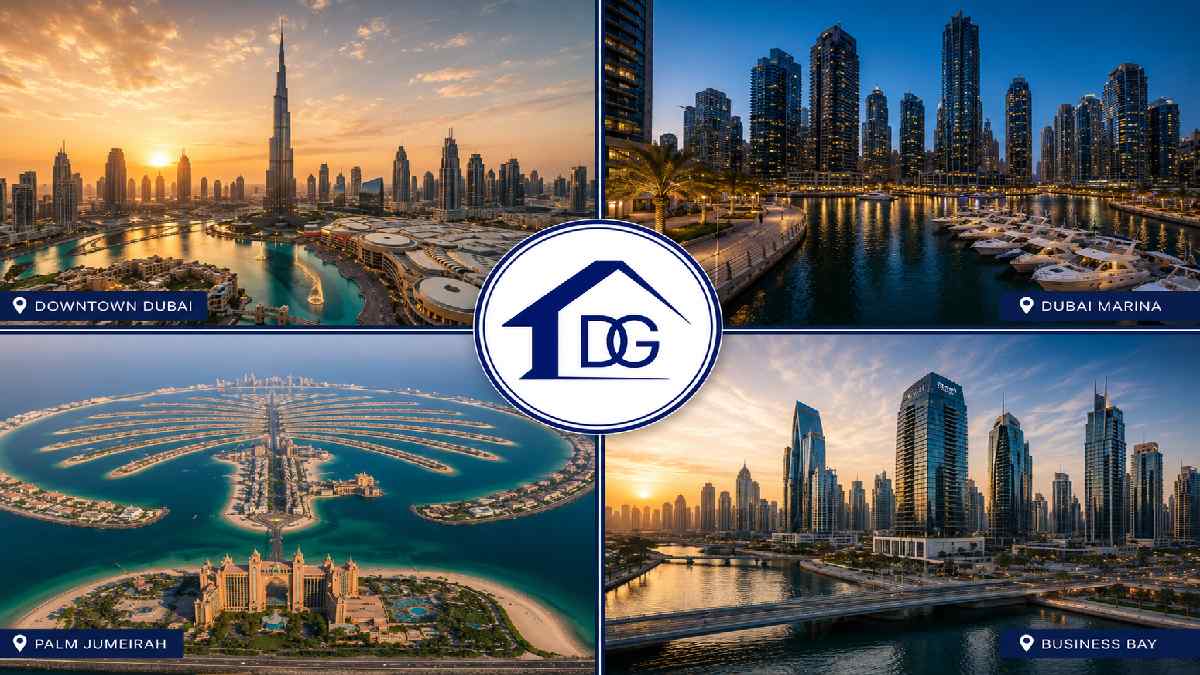
Best Areas to Buy Property in Dubai
Choosing the right location is one of the most important decisions when purchasing property in Dubai.
Different communities offer different advantages depending on your objectives, whether you’re seeking high rental yields, long-term capital appreciation, or a luxury lifestyle.
Below are some of Dubai’s most popular investment locations.
Downtown Dubai
Downtown Dubai is one of the city’s most prestigious and recognizable districts.
Home to iconic landmarks such as the Burj Khalifa and Dubai Mall, it consistently attracts strong demand from both buyers and tenants.
Best For
- Luxury property investment
- Long-term capital appreciation
- Premium rental income
Dubai Marina
Dubai Marina is one of Dubai’s most vibrant waterfront communities.
Its modern skyline, marina promenade, restaurants, cafés, and beach access make it one of the city’s most desirable residential neighborhoods.
Best For
- Rental income
- Holiday homes
- Lifestyle-focused investors
Business Bay
Located adjacent to Downtown Dubai, Business Bay has become one of the city’s leading commercial and residential districts.
Ongoing development and increasing business activity continue to drive strong investor interest.
Best For
- Professionals
- High-demand rental properties
- Capital growth
Dubai Hills Estate
Dubai Hills Estate is widely regarded as one of Dubai’s best master-planned communities for families.
The neighborhood offers:
- Large green spaces
- International schools
- Healthcare facilities
- Shopping destinations
- Golf course views
Best For
- Family living
- Long-term investment
- Premium villas and apartments
Jumeirah Village Circle (JVC)
Jumeirah Village Circle, commonly known as JVC, is a popular choice for investors seeking affordable entry prices without sacrificing rental demand.
Its growing infrastructure and competitive pricing have made it one of Dubai’s fastest-growing residential communities.
Best For
- First-time investors
- Affordable apartments
- Attractive rental yields
Palm Jumeirah
Palm Jumeirah is one of the world’s most iconic man-made islands and represents the pinnacle of luxury waterfront living in Dubai.
The area features high-end villas, beachfront apartments, and branded residences that attract affluent buyers from around the world.
Best For
- Luxury real estate
- High-net-worth investors
- Prestige properties
- Long-term capital appreciation
Common Mistakes to Avoid When Buying Property in Dubai
Although Dubai has one of the world’s most transparent and well-regulated real estate markets, making the wrong investment decision can reduce your returns. Before purchasing a property, be aware of these common mistakes.
Choosing a Property Based Only on Price
A lower purchase price does not always mean a better investment.
Factors such as location, developer reputation, future infrastructure, rental demand, and resale potential are often far more important than the initial purchase price.
Not Researching the Developer
When buying an off-plan property, the developer’s reputation is one of the most critical factors.
Before making a decision, review:
- Previous completed projects
- Construction quality
- Delivery track record
- Financial credibility
- Customer satisfaction
Working with an established developer can significantly reduce investment risk.
Ignoring Additional Costs
Many first-time buyers focus only on the property’s selling price while overlooking additional expenses.
These may include:
- Dubai Land Department (DLD) fees
- Trustee Office fees
- Service charges
- Mortgage-related costs (if applicable)
- Administrative fees
Planning for these expenses helps prevent unexpected financial surprises.
Choosing the Wrong Location
Every Dubai community serves a different investment objective.
Some neighborhoods offer:
- Higher rental yields
- Better long-term appreciation
- Stronger demand from end users
- More affordable entry prices
Selecting the right location should always align with your financial goals.
Buying Without Professional Advice
Dubai’s property market offers thousands of investment opportunities.
Working with an experienced real estate advisor can help you:
- Compare projects objectively
- Understand market trends
- Review developer credibility
- Evaluate payment plans
- Identify high-potential investment opportunities
Professional guidance can make a significant difference, especially for first-time international buyers.
Property Buying Checklist
Before signing any purchase agreement, make sure you have reviewed the following:
✔ Developer reputation
✔ Project location
✔ Payment plan and financing options
✔ Government fees and additional costs
✔ Expected completion date
✔ Rental yield and investment potential
✔ Residency eligibility
✔ Future resale opportunities
✔ Sale and Purchase Agreement (SPA)
✔ Independent professional advice before signing
Final Thoughts
Buying property in Dubai offers an excellent opportunity to diversify your investments, preserve wealth, and generate long-term rental income.
With transparent regulations, full freehold ownership in designated areas, attractive tax advantages, and residency opportunities for qualifying investors, Dubai continues to rank among the world’s most appealing real estate markets.
However, successful investing involves much more than choosing an attractive property.
Carefully evaluating the developer, selecting the right location, understanding all associated costs, and becoming familiar with Dubai’s property laws are essential steps toward making a confident and profitable investment.
Comparing different projects based on price, payment plans, location, developer reputation, and long-term investment potential will help you choose the property that best matches your financial objectives.
Why Choose Davood Ghasemi?
At Davood Ghasemi, we are committed to making your Dubai property investment journey simple, transparent, and secure.
Our experienced real estate specialists provide expert guidance throughout every stage of the buying process—from identifying the right investment opportunity to completing the ownership transfer.
Whether you’re purchasing your first apartment, expanding your investment portfolio, or exploring residency opportunities through real estate, our team is here to help you make informed decisions with confidence.
With access to carefully selected projects from Dubai’s leading developers, up-to-date market insights, and personalized investment advice, Davood Ghasemi helps you find properties that align with your goals and maximize your long-term returns.
Ready to invest in Dubai real estate? Contact Davood Ghasemi today and let our experts help you find the right property with confidence.